Breathing in Extension, Not Just Flexion: Diaphragm and Rib Cage Mechanics
Oct 17, 2026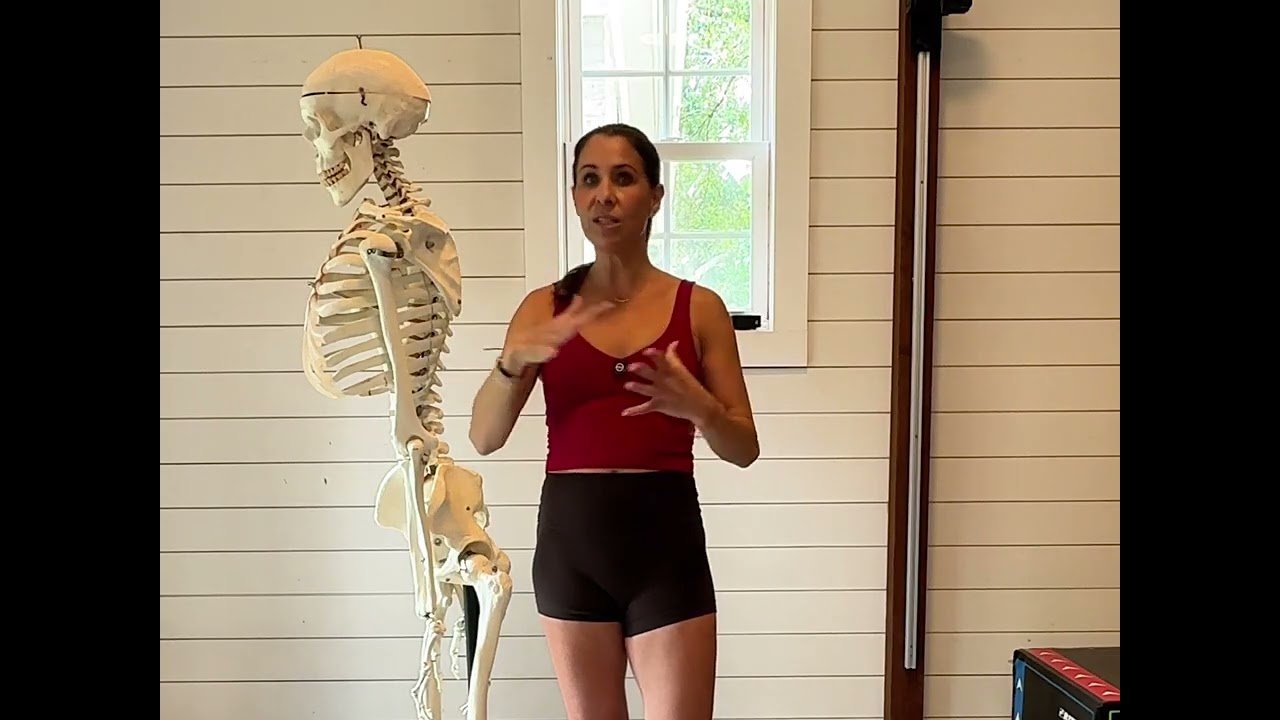
Most breathing drills train us in flexion, which makes sense for creating posterior expansion of the rib cage and restoring the zone of apposition, the part of the rib cage where the diaphragm domes up and opposes the ribs. But our bodies also need to go into extension in daily life, sports and dynamic movement. Here are my training thoughts on how to build the breath in extension too.
A quick review of inhale and exhale
On an inhale we get a bucket handle motion of the ribs and a pump handle motion where the sternum lifts, while the diaphragm flattens downward. The diaphragm attaches to the lumbar spine through crura, down to L1 and L2 on the left and lower, to L3, on the right. The right side of the diaphragm is bigger and domes higher, while the left is shallower, which contributes to the asymmetry many of us have. On the inhale the infrasternal angle widens and we may get some extension at the thoracolumbar junction. On the exhale, the bucket handle ribs close down and the diaphragm moves upward as pressure leaves the thoracic cavity.
Why flexion alone isn't enough
In many breathing positional drills we use a flexed exhalation position that restores the zone of apposition by keeping the abdominals short. That's great for restoring the zone of apposition, but it doesn't necessarily improve our ability to breathe fully in more extended positions. When I do something like a strict press, I extend and allow my spine to extend, but I should be able to control that position, controlling both the abdominals and the diaphragm. The doming of the diaphragm is a sort of eccentric loading.
Plenty of people sit in a flexed posture, and then when they lie on their backs they extend up. The zone of apposition is still not there despite being in more spinal flexion. They flex, and still struggle with squats and overhead work, with excessive rib flare. These people may need to extend higher up, staying more neutral at the thoracolumbar junction and lumbar spine. In some ways, I'd say we train the thoracolumbar junction to come forward into more extension throughout the whole spine, allowing the bucket and pump handles to work, with eccentric control of the abdominal wall.
Exercise 1: All fours breathing in flexion
Start in a basic all fours position and move between flexion and extension. Push away from the floor, flex and inhale in this position. In flexion, we can take a fuller, deeper breath than when we extend and inhale, because this position makes it easier to breathe into the back and get posterior expansion. Do five breaths here, feeling the lower ribs close down on the exhale and keeping the abdominal wall engaged so pressure doesn't push out.
Exercise 2: All fours, untuck the pelvis
From all fours, keep the spine relatively neutral and untuck your pelvis so it tilts forward. This isn't about extending the whole spine; the idea is to explore lumbar extension. Take a full inhale, then exhale all the air out and get the ribs to come down without losing that anterior tilt. Let the upper and lower abs eccentrically control the exhale. Inhale staying extended, then exhale and let the ribs come down and in, maybe not as far as in flexion, but holding eccentric control. Try two or three breaths.
Exercise 3: Extend through the mid-back
If that felt good, think about extending through the thorax, the T4 to T8 area between your shoulder blades. From a neutral spine position, let the arms go down so the midback between the scapulae extends. Inhale through the nose and see if you can get the lower ribs to move down and back. You'll stay extended with the lats at length, and still get movement through the front of the rib cage. Hold some tension in the abdominals as you exhale. Because the back is blocked off, you won't get as much expansion between the shoulder blades, but you can still get some posterior expansion, and you're controlling the abdominal wall eccentrically while the diaphragm domes up a little.
Exercise 4: Full spinal extension
Set up and let yourself go into extension, looking toward the ceiling. Use whatever amount of extension you have access to. Inhale, exhale, and try to get movement into the lower ribs. At the end of the exhale, hold some tension and take another inhale. This puts an eccentric load on the abdominals in the lengthened position.
Exercise 5: Lying on your back with arms overhead
You can also explore this concept on your back. Take your legs all the way out and extend your arms overhead, allowing yourself to go into more extension. Take an inhale, and on the exhale see if you can get the ribs to close down even in this extended position. Keep working the abdominals eccentrically, controlling the inhalation and the front of the thoracoabdominal cavity.
Who this helps
This is especially helpful for people who tend to grip the upper abs and go into a more flexed thoracic position. By building control in lots of extension, they can improve strength gains and control rib flare. We can give them both ends of the spectrum so the system is adaptable.
Watch more

How to stretch your diaphragm for better 360° breathing

Breathing strategies for different body types
Keep exploring
Try my free Spinal Health in Motion course, move with me in weekly Alchemy classes, or learn the full approach in Empowered Performance.
