
Flat Feet and Navicular Drop: What It Is and Exercises to Explore
Oct 17, 2026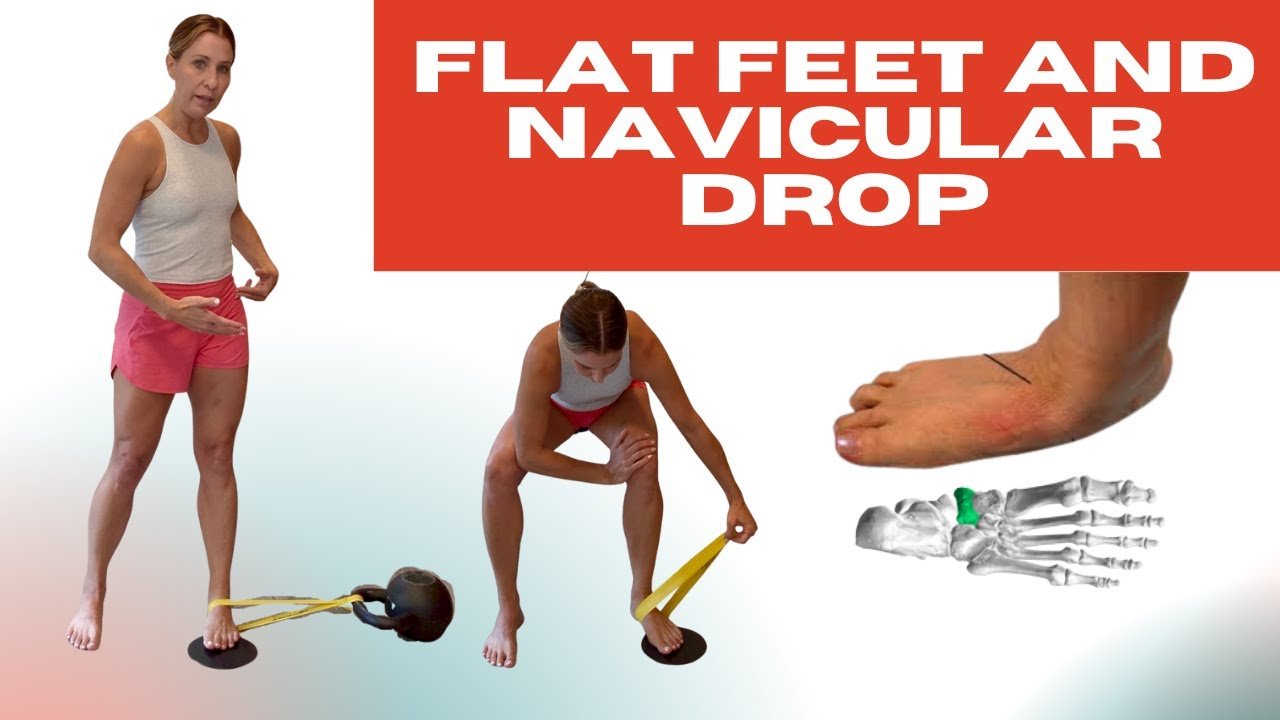
Having a flat foot is not a bad thing at all. It becomes something to look at when the foot sits in a flattened position all the time and can't spring back up. That can make you a little less springy from the bottom up, and it can cause irritation or pain in the foot.
Why the navicular matters
The navicular is a small bone that helps support the medial arch. Sometimes it drops down and stays in that descended position. That is a problem because we need access to a supinated foot shape to push off at toe-off, and we need a foot that can move from a heel-strike position into mid-stance and back out during gait.
The posterior tibialis
The posterior tibialis is a deep calf muscle that wraps behind the inside of the ankle and attaches to the navicular, running under the foot. It helps support the arch, invert the foot and stabilize during gait. When it is weak or inhibited, the navicular has less support. When it is overactive, it can keep the arch rigid. The exercises below work on improving how this muscle functions.
The approach: mobilize, strengthen, integrate
Step 1: Mobilize the navicular. Start with a drill that pushes the navicular down even more, to look for some recoil back up. With the heel lifted, thrust into the front of the foot, especially the first metatarsal. Thrust and relax for about 15 to 20 reps on each side.
Step 2: Strengthen the arch with targeted work.
Banded windshield wiper (seated resisted supination): loop a small band around the inside of the foot, anchor it with your arm so the upper leg stays still, and swivel the foot out against the band on a diagonal. Notice the arch lift. Don't grip with your toes. Aim for 2 to 3 sets of 15.
Standing band and slider drill: with a band around the arch and your toes on a slider, find the inside of the heel, then the outside of the heel as you rotate. The arch drops when the band supports it and lifts as you rotate out. Aim for 2 sets of 10 to 15.
Step 3: Integrate into full body exercises.
Long lever bridge: lift the toes off the wall as you come up to find a supinated foot shape, then lower into a mid-stance feeling. About 10 reps per side.
Wall-anchored hinge: with the opposite knee on the wall, move between the inside heel (pronated, mid-stance) and the outside heel (supinated). 2 sets of 6 to 8 per side.
Dynamic split squat with the front foot on a plate: hop up and down while the arch stabilizes. 2 sets of 10 per side.
How to program it
Listen to your body and meet it where it is. If your feet hurt, start with the direct exercises that create the windshield wiper shape and build toward the integrated hinge and split squat as the lower limb feels more secure. If your feet feel fine, go through all of it as a mini foot strengthening program one or two times a week.
Watch more
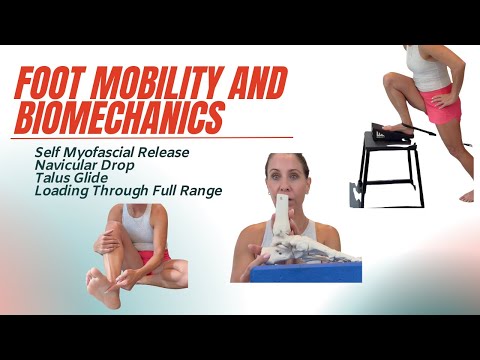
Foot Mobility Exercises: 4 Pronation Drills for Healthier Feet

Lower Limb Series Part 2: Lower Limb Strength

Lower Limb Series Part 1: Lower Limb Mobility
Keep exploring
Try my free 5 Day Fundamentals, train with me in Alchemy, or expand your toolbox in Empowered Performance.
