Foot and Pelvic Floor Connection: How Your Feet Affect Pelvic Floor Symptoms
Oct 17, 2026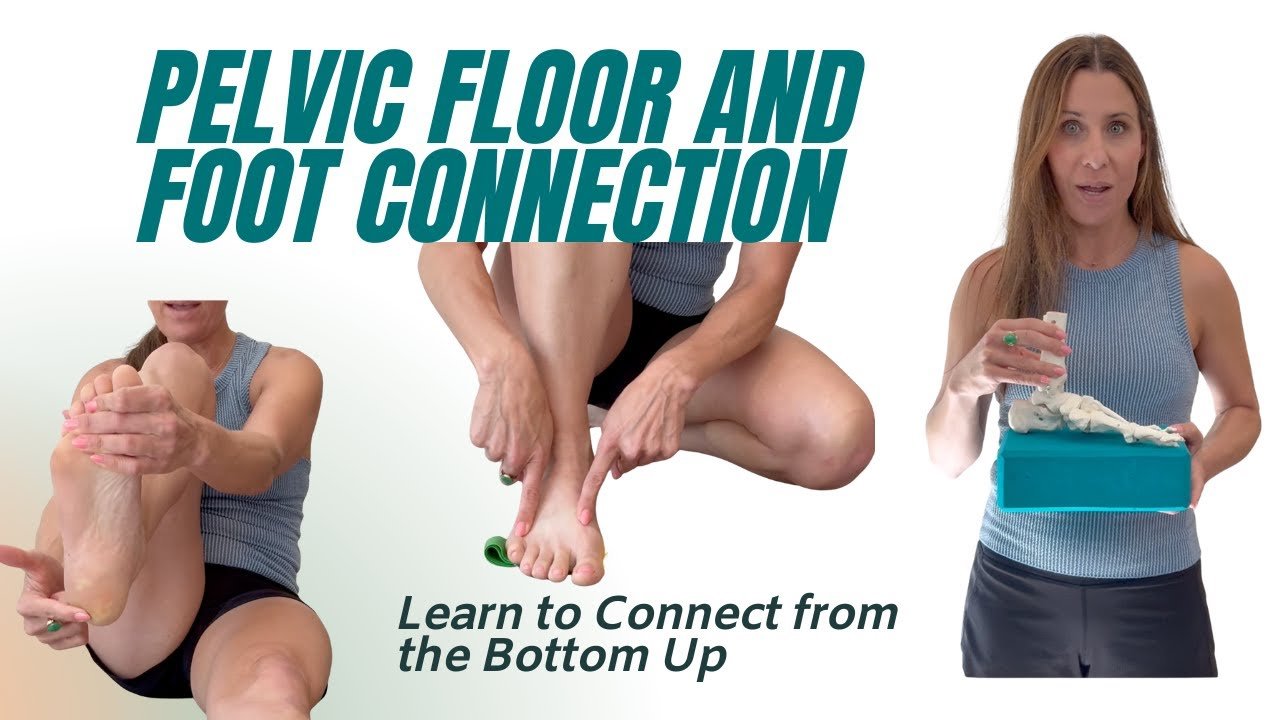
The foot and lower limb can have a big impact on the pelvic floor. In this video I explain how to build a supportive lower limb and integrate the foot and pelvic floor, so you feel stable and supported from the bottom up.
Pronation and supination through the gait cycle
To walk well, the foot has to be able to pronate and supinate effectively. At heel strike we move toward a more supinated shape, where the arch is lifted. Through mid stance the foot goes into a pronated, internally rotated position: the arch lowers, the calcaneus tips forward and the transverse arch spreads. As we leave the ground we resupinate, the arch lifts, and we propel ourselves forward.
Up the chain, when we're in a more supinated shape we should see more external rotation overall. That lets the pelvic floor descend, creating space for pressure to push into it. In mid stance, with more internal rotation, the pelvic floor can lift to respond to ground reaction forces and push pressure back up. The pelvis then moves into a more anteriorly tilted position to help propel pressure forward.
Elasticity at the ankle
The second big impact from the foot to the pelvic floor is often elasticity at the ankle. We can have a rigid midfoot that stays supinated and lifted, or a very mobile midfoot. If we see a lot of eversion with the ankle tipping in, we can assume we've lost some Achilles spring. When the ankle works well it acts like a spring: the muscle-tendon unit stretches, and that stretch creates a recoil. Without it, our muscles have to work harder, and we often see the knees and hips sinking up the chain and a lot of tension in the pelvic floor. That impacts how the pelvic floor can contract and relax, and if you have pelvic floor symptoms it can be hard to get started with this.
Three variations for building elasticity
Start with whatever feels safe. If you have pelvic floor symptoms, go gently and stay within what you can control.
1. Bridge hops. Lie in a bridge position with your legs extended rather than at 90 degrees. Elevate your heel and peel your hips up. Slowly start to create small hops, controlling tension in the lower limb without letting your heel drop. As you get good at it, make the hops a little faster. It's also a great way to practice pressing into the ground and pushing the pelvis forward as in a heel strike position. I recommend two to three sets.
2. Ball squeeze hops. Especially useful for people with pelvic floor symptoms like leaking, heaviness or prolapse sensations. Squeeze a ball between your thighs, exhale as you coordinate with the hop, and exhale every time you hit the ground. If you feel safe, let the ball squeeze come naturally as you react and hop up and down.
3. Side to side hops. An exercise most people find easy to get into: hop from one foot to the other, working on stiffness at the ankle with quick hops. Once you're comfortable, progress to single leg hops and take them side to side.
Bunions are not just a foot issue
A bunion involves the first metatarsal head rotating out and moving away from the second, while the big toe starts to come in. But it's a position issue too. If I shove my pelvis forward, the weight goes into the front of the foot, and the tibia is stuck in a position where the talus can't glide back. We run out of dorsiflexion quickly. Through the gait cycle we normally push forward off the first met head, but when we lose that ability we roll off the first met head and let the toe go in. That also costs us control of the glutes pushing us forward, so addressing the issue means addressing everything up the chain, not just the foot.
Supporting the foot: two heel exercises
For these I use rolled-up bands as wedges: one under the first metatarsal head and one under the fourth and fifth. This widens the transverse arch and lets me focus on movement at the heel. There are two key points on the heel: the outside back, and the inside front.
Wall heel drag. Lie back with your legs up a wall at 90 degrees. Find the outside back of your heel and lift, inhaling and relaxing the pelvic floor, with the pelvis tucking under. Then slowly come down, find the inside of the heel, and exhale as you let the pelvis tip slightly forward while dragging the inner heel down the wall. Repeat with the same breath pattern.
Split squat with wedges. Using the same wedges, start in a split stance centered over the front foot. Inhale as you go down, finding the inside front of the heel instead of the outside back. Hold for one full breath cycle, then exhale and press up. As you inhale down the pelvic floor lengthens and descends, and as you exhale it lifts. Start with three or four reps on each side.
Watch more

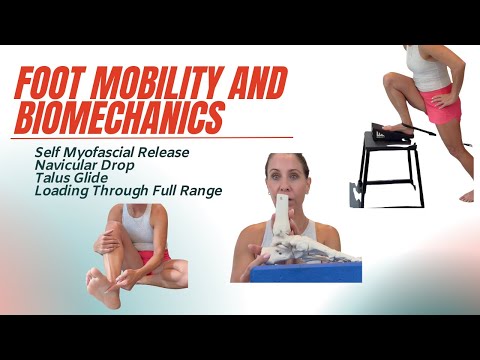
Foot mobility exercises: 4 steps to improve your foot mobility
Keep exploring
Try my free Spinal Health in Motion course, move with me in weekly Alchemy classes, or learn the full approach in Empowered Performance.
