Hack for More Glute Activation? Using a Band Under the Fourth and Fifth Metatarsal Heads
Oct 17, 2026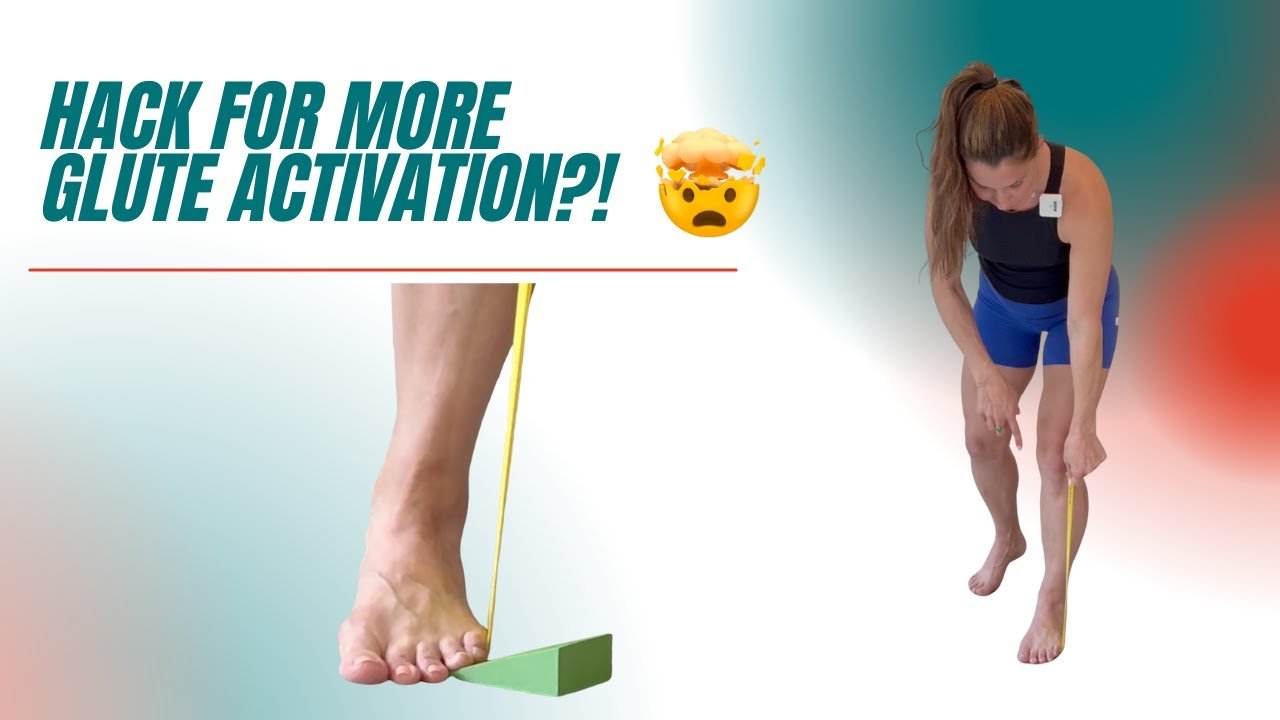
Last week I shared a simple hack that helps you feel and sense your glutes. This follow-up explains what I think is actually happening in the foot when you add a band, and why it changes the way the whole chain responds.
Where the idea started
In the original video I used a fairly stretchy band, placed it so I could pull up against it in an elevated position, and found it elicited a glute contraction as I pulled against it. I first used it to create different constraints for the ankle and foot, which can create different responses up the chain.
In that same class I did a calf raise while the band pulled my ankle toward the side. To resist that pull I had to use more of the outside of my calf muscles, creating a little more subtalar inversion and pulling my foot into a more supinated shape.
Why the band goes under the fourth and fifth
When I first put the band under the fourth and fifth metatarsal heads and raised up, I thought I was having to pull and push into a supinated shape. As I went through the exercise and talked it over with members of my Academy, I understood it differently. We've seen the band under the first metatarsal head before, where you keep that head on the ground to prevent the foot from rotating laterally and losing the first metatarsal head.
In the case where the foot rolls out, I think the band under the outside of the foot is supporting those last two metatarsal heads. It's almost holding them up, which lets me keep a nice wide transverse arch, and that shape is better for facilitating the glutes.
Compare with and without the band
When I do the same calf raise without the band, my foot struggles through the forefoot and the transverse arch. As I go up on the forefoot, I cave in because my pinky toe wants to come off the ground, and from the front you can see it fail to reach the floor because my fifth metatarsal is struggling to sense the ground. As soon as I place the band down and give some support to the fourth and fifth, the pinky toe settles into position, I can create a wider transverse arch and my foot feels more supported.
A wedge variation
Since working through this, one thing I'd add is a wedge underneath the fourth and fifth toes and metatarsal heads. With a wedge, my pinky toe looks relatively relaxed because it has something to push into.
Explore first, understand the why later
If you've ever done an exercise and thought, "that felt so good and helped my body, but I'm not sure how to understand why," that is exactly what we do in Alchemy classes. We explore movement and sometimes don't have the perfect understanding right away. Then we step back and it makes sense. It's often in the why and the how that we learn the most about what's going on within human movement.
Watch more

Foot and pelvic floor connection
Keep exploring
Try my free Spinal Health in Motion course, move with me in weekly Alchemy classes, or learn the full approach in Empowered Performance.
