Should You Cue a Bottom-Up Exhale? Suction Up vs. Bottom Up
Oct 17, 2026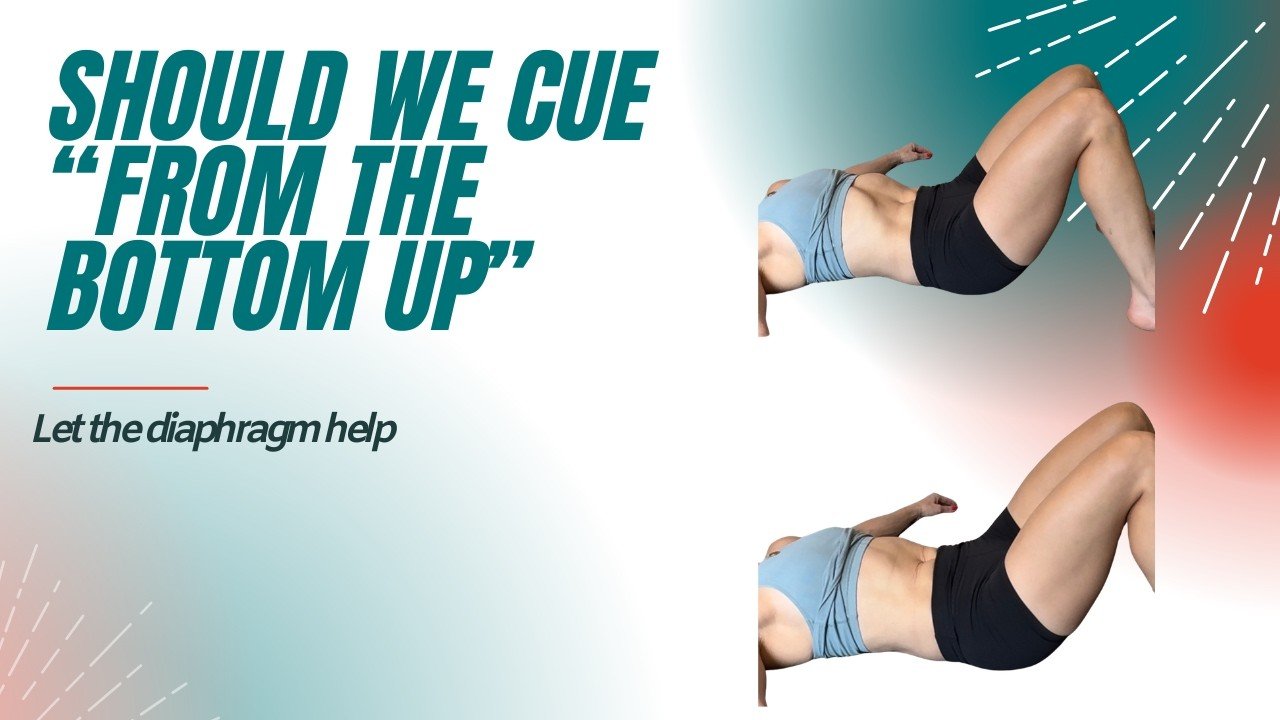
This is Part 1 of my Suction Up vs. Bottom Up series. Continue with Part 2 below.
"Pull up from the bottom" is one of the most common breathing cues out there. I use it, other trainers use it, and physical therapists use it. It is a good cue, but I think it can miss the mark for some people, and here is why.
What bottom-up does
With a bottom-up approach, the pelvic floor rises and you think about lifting it to push pressure up. That is a great cue for people who have a lot of pressure pushing down and need to work on that, including people dealing with prolapse or incontinence.
The problem is that the pelvic floor becomes the primary mover of pressure. We are asking it to lift and push pressure up, and we are facilitating those muscles to work harder all the time.
The diaphragm-first alternative
Think about it from the diaphragm first. On the exhale, the diaphragm domes up and the ribs close down. That creates a suction effect, like a plunger, that pulls the contents of the abdomen up first. This unweights the pelvic floor so it doesn't have to work as hard, and the pelvic floor meets that pressure where it is, as part of a coordinated unit.
What I often see with the bottom-up cue is that the lower ribs don't move and the diaphragm doesn't dome the way it could, so you don't get that suction from the top. When I cue suction up instead, my ribs come way down, I have little tension in the pelvic floor, and it still feels like my deep abdominals are on. It feels more like a corset than a pelvic floor lift.
How to progress it
Lying down. Start in a neutral spine, with a small gap between your lower back and the floor. Relax the pelvic floor and think of the diaphragm coming up as the ribs close. Hold that abdominal tension and inhale so the pressure moves into the back of the rib cage and chest.
Kneeling. Wiggle your pelvis to let the glute tension go, place your hands on your rib cage, and think about the rib cage coming down and in. The hardest part is holding this without flexing the spine, keeping the sternum tall and breathing into your back and chest against gravity without over-gripping the pelvic floor.
Squatting. Hold light weights at shoulder height with the arms open to the sides, and use much lighter weights than you normally would. Set the rib cage, exhale from the diaphragm, then lower down with the sit bones lifted and breathe into the back around T8 to T12.
The takeaway
Bottom-up is a good first line of defense for teaching someone to feel lower abdominals that have turned off. Then we need to help them transition out of that cue and learn to do it from the diaphragm, letting the pelvic floor relax more. This is something I am exploring more with people, and I hope it is helpful.
Watch more

Should you exhale from the bottom up? Suction Up vs Bottom Up Part 2

Breathing Strategies for Different Body Types

How to stretch your diaphragm for better 360° breathing
Keep learning
Learn more about the pelvic floor in my free mini course, Pelvic Floor in Motion, or try my free 5 Day Fundamentals. If you want to go deep on pressure management, biomechanics, exercise selection and programming, and need continuing education credits, see Empowered Performance.
