
5 Movement Fundamentals, 10 Ways to Explore Them
Sep 18, 2026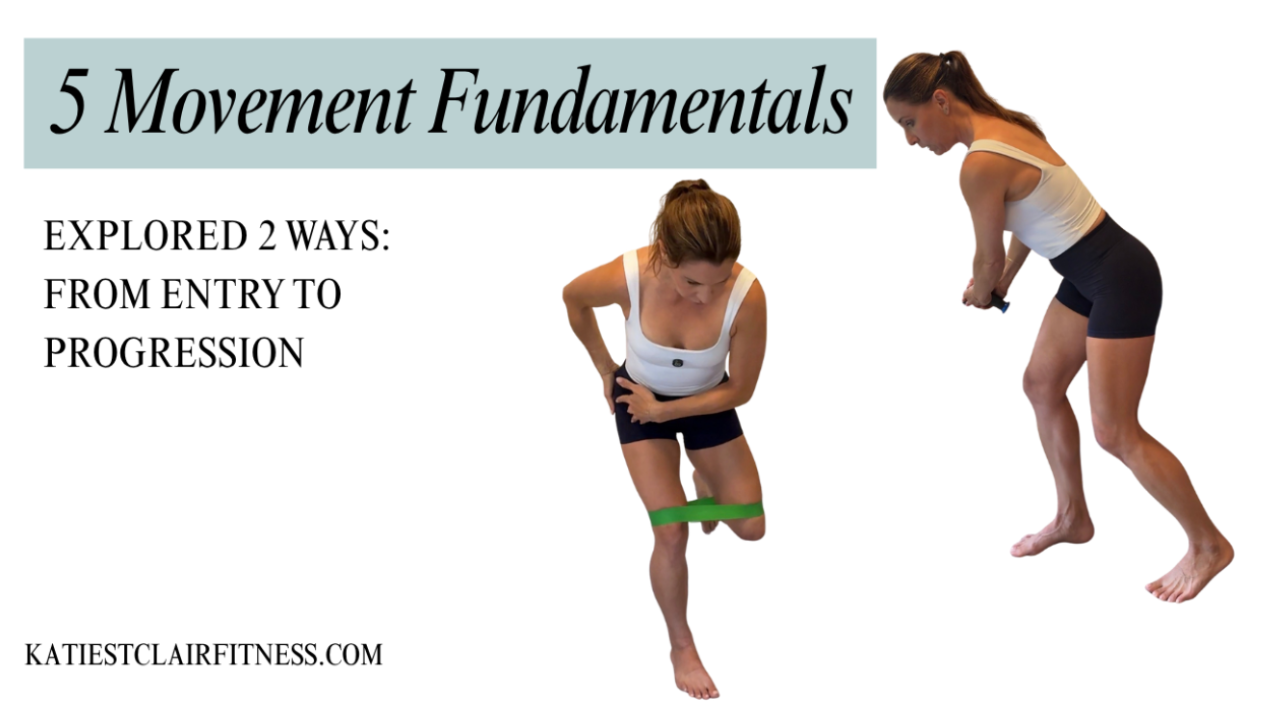
A few years ago, I started organizing much of what I teach around five movement fundamentals. They're concepts I come back to again and again with clients, students, and coaches because they give us a framework for understanding how the body organizes itself for movement.
The five fundamentals are:
- Breathing and pressure management
- Pelvis and thorax orientation
- Hip shifting
- Shoulder protraction
- Co-contractions and hip extension
Understanding these concepts is one thing. Knowing how to recognize, experience, and apply them during exercise is another.
That's why Zoe Wood and I put together a series exploring each fundamental through two different exercises. Zoe is a coach in the Empowered Fitness Membership and an Empowered Performance graduate, and she has a real gift for meeting people where they are. She demonstrates an approachable entry point for each concept, and I build on that same idea with a progression that adds another layer of complexity. Not because the progression is automatically better, but because each variation gives us a different environment to explore the same underlying idea.
Depending on the person, the task, and what their body has access to that day, either version might be exactly what we need.
Here's what that looks like.
Fundamental 1: Breathing and Pressure Management
We begin with 90/90 breathing because it gives us a supported position to explore the relationship between the rib cage, pelvis, diaphragm, and abdominal wall. With less movement to manage, we can pay attention to things like the exhale, expansion through the rib cage, and how pressure moves through the trunk.
From there, we bring those same concepts into an all fours position. Gravity has changed, there's more contact with the ground, and the body has to organize pressure a little differently while maintaining the position. The breathing principles haven't changed. We've simply changed the environment.
Fundamental 2: Pelvis and Thorax Orientation
A stacked squat gives us an entry point for exploring how the pelvis and thorax organize in relationship to one another while the hips, knees, and ankles bend. Rather than chasing "perfect posture," I'm more interested in whether the body can manage pressure, stay supported, and access the movement we're asking for.
The kickstand hinge takes that same relationship into a more dynamic, asymmetrical position. Now there's more weight on one side and a greater demand for the pelvis and thorax to respond to one another as we hinge. It's the same fundamental in a different context.
Fundamental 3: Hip Shifting
The side-lying hip shift gives us a supported place to explore the relationship between the pelvis and femur. Instead of thinking about the hip only as a joint moving in isolated directions, we can begin to feel how the pelvis moves around the femur and how that relationship contributes to rotation and weight shifting.
From there, we take that same idea into a more upright position with a wall hinge hip shift. Now the body has to manage gravity while maintaining access to that movement at the hip.
Fundamental 4: Shoulder Protraction
Shoulder protraction often gets confused with simply rounding the shoulders forward, but scapular protraction is an important part of how the shoulder blade and rib cage move together. The rockback serratus press gives us a supported way to explore movement of the scapula around the rib cage while creating expansion through the back of the thorax.
Kneeling Plank Serratus Rollout
The kneeling plank serratus rollout builds on that idea by asking us to maintain support through the upper body as the arms move farther away. There's more demand through the trunk and shoulders, but the goal is still to allow the scapula to move around the rib cage while the body stays supported.
Fundamental 5: Co-Contraction and Hip Extension
Single-Leg Hinge Co-Contraction
Co-contraction is about creating support around a joint through muscles working together. In a single-leg hinge, we can explore how the hip, pelvis, and trunk cooperate to create enough stability for movement without simply locking everything down.
Co-Contraction With Rotation or Chop
From there, we can add rotation or a chopping motion. Now the body has to maintain that support while managing movement in another plane, giving us another way to explore how the hips, pelvis, rib cage, and trunk work together.
The Progression Isn't the Point
One of the biggest things I hope you take away from this series is that movement doesn't need to follow a rigid ladder where every exercise gets harder until you reach the "best" version. A regression isn't less valuable, and a progression isn't automatically better. They're different entry points.
Sometimes a more supported position helps you feel something you haven't been able to access elsewhere. Sometimes changing orientation, adding load, or introducing rotation helps the concept click in a new way. What matters is what the person in front of us needs, what they can currently access, and what we're trying to help them explore.
The five fundamentals give us a place to start, but they aren't five rules for how everyone should move. They're a framework for looking at how the body is organizing itself and what other options might be available.
Want to Learn the Five Fundamentals?
If these concepts are new to you, or you want to better understand what we're looking for and why, I teach all five in my free 5-Day Fundamentals Course. You'll explore breathing and pressure management, pelvis and thorax orientation, hip shifting, shoulder protraction, and co-contractions and hip extension while beginning to connect those ideas to movement and coaching.
Sign up for the free 5-Day Fundamentals Course
You can also watch all 10 exercises on YouTube to see Zoe and me explore each fundamental in two different ways. Start with the version that makes sense for you, notice what changes, and remember that there's always more than one way into a movement.
