
Experiencing the Fullness of Breath in Spinal Extension
Sep 23, 2026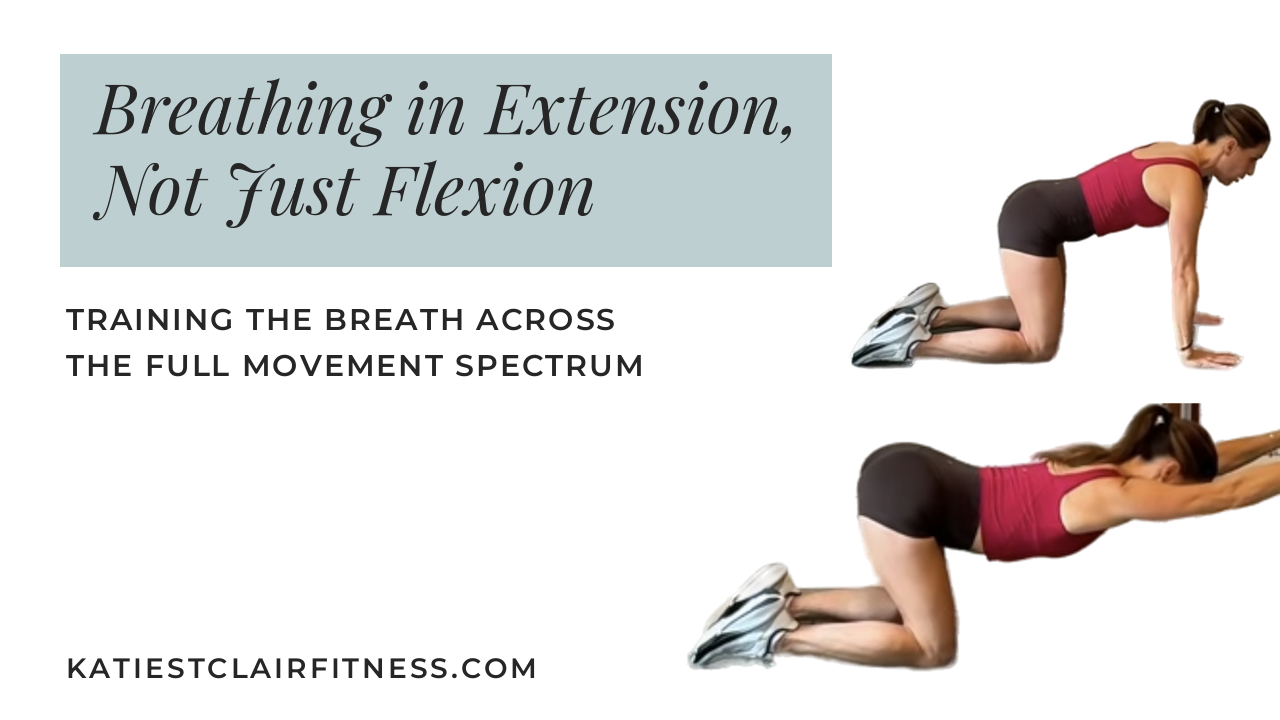
A lot of breathing work to restore diaphragm position happens in flexion. Here’s what changes when we explore the other half of the movement spectrum.
Most of the breathing work you’ve probably seen happens in flexion. You round the spine, tuck the pelvis, exhale, feel the lower ribs come down, and expand into the back of the rib cage. That work is incredibly valuable because it can help restore the relationship between the diaphragm and the lower rib cage, and for a lot of people, it’s exactly where they need to start.
But we don’t move through life curled into a breathing drill. We reach overhead, squat, sprint, press, and produce force in more upright and extended positions. The diaphragm, rib cage, and abdominal wall still need to work together there too, and that’s the part I see explored much less often.
Lately, I’ve been playing with what happens when we take the breathing mechanics we’re often trying to find in flexion and ask the body to maintain them as we move toward extension. Rather than treating extension as a position where the ribs simply flare open and the belly loses control, can we actually experience a full breath there?
That’s what I want to explore with you.
First, a quick refresher on the breath
When you inhale, the diaphragm contracts and descends while the rib cage expands. The lower ribs move out to the sides in what’s often called a bucket-handle motion, while the sternum and upper ribs move up and forward in more of a pump-handle motion.
There’s also some natural asymmetry built into the system. The right side of the diaphragm typically sits a little higher because of the liver underneath it, while the left side sits below the heart. The diaphragm also attaches into the lumbar spine through the crura, with the right side generally extending a little lower than the left.
On the exhale, the diaphragm relaxes and rises again as the ribs move down and inward. As that happens, we restore more of the relationship between the diaphragm and the inner surface of the lower rib cage. That area is known as the zone of apposition, and it plays an important role in how the diaphragm creates pressure and influences movement of the rib cage.
This is one reason so many breathing drills place you in flexion. Rounding the spine shortens the abdominal wall, helps the ribs move down, and often makes it easier to feel expansion into the back of the rib cage. It’s intuitive, it works, and it can be an incredibly useful starting point.
But it’s still only one part of the movement spectrum.
The gap I kept noticing
What sent me down this road was noticing people who looked very flexed or rounded when they were standing, but the moment they laid on their back, their ribs flared right up. So even though they appeared flexed from the outside, they still had a hard time controlling the rib cage and managing pressure as the body moved toward extension.
Then you ask that same person to squat, reach overhead, or press, and the ribs may immediately pop forward. For some people, what I see instead is more of a swayback-type strategy where the pelvis sits forward, the abdominal wall stays shortened, and the body has trouble accessing extension without losing control of the rib cage.
In those cases, the answer may not simply be more flexion. They may need the ability to let the pelvis move slightly forward, restore some lumbar curve, come out of some of that upper-back rounding, and learn how to lift up tall while still maintaining control of the breath.
That led me to a question I keep coming back to: can we help someone move toward extension and still maintain the relationship between the diaphragm, abdominal wall, and rib cage? Can we experience the fullness of the breath without needing to round the spine first?
Decoupling the breath
Breath and spinal movement are usually pretty closely linked. In many movement practices, you exhale as you flex and inhale as you extend. It’s natural, it feels good, and there’s nothing wrong with it.
But if the goal is to expand someone’s options, it can also be useful to intentionally separate those things. Can you inhale while staying flexed? Can you fully exhale while staying extended? Can you allow the spine to move into extension without the ribs simply flaring forward?
That’s the thread running through the progression below. We’re taking familiar breathing mechanics and changing the position in which we ask the body to find them. Some of these shapes make it harder to take a full breath, while others make it harder to maintain rib cage control on the exhale. That challenge is part of the exploration.
We’re not always chasing the easiest breath possible. Sometimes we’re asking the diaphragm, rib cage, and abdominal wall to organize in ranges they don’t spend much time in so the body has more options when it needs them.
I also want to be clear that I haven’t found much research specifically looking at this kind of breath and spinal decoupling across a full flexion-to-extension spectrum. I don’t want to present this as a finished protocol or say this is the one way everyone should breathe. It’s something I’ve been exploring based on the anatomy, the mechanics, and what I’m seeing in practice.
Try it in your own body and see what you notice.
The progression
1. All fours, flexed, breathing into the back
Start on all fours and push away from the floor as you gently round the spine from top to bottom. Stay in that position and inhale, seeing if you can create expansion through the back and sides of the rib cage.
Because you’re already in flexion, it may feel harder to take a really large inhale than it would in extension, and that’s okay. On the exhale, feel the lower ribs move down and inward while keeping a little tension through the abdominal wall so you don’t immediately lose the position on your next inhale. Spend about five breaths here.
2. Anterior pelvic tilt into lumbar extension
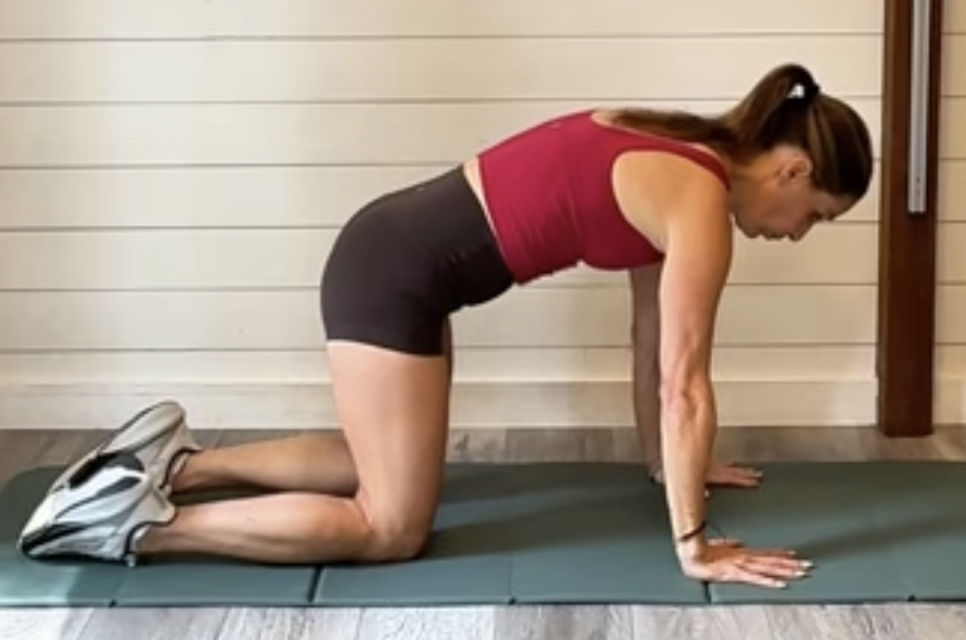
From all fours, keep pushing away from the floor but begin to untuck the pelvis. Move into a small anterior pelvic tilt and allow the lumbar spine to extend while trying to keep the thoracolumbar junction relatively quiet.
Take a full inhale, then exhale all the air out and see if you can let the ribs move down without losing the pelvic position. This is where things start to get interesting because the abdominal wall is being asked to lengthen while still helping manage pressure and control the rib cage. You may feel this especially through the lower abdominal wall.
3. Upper thoracic extension
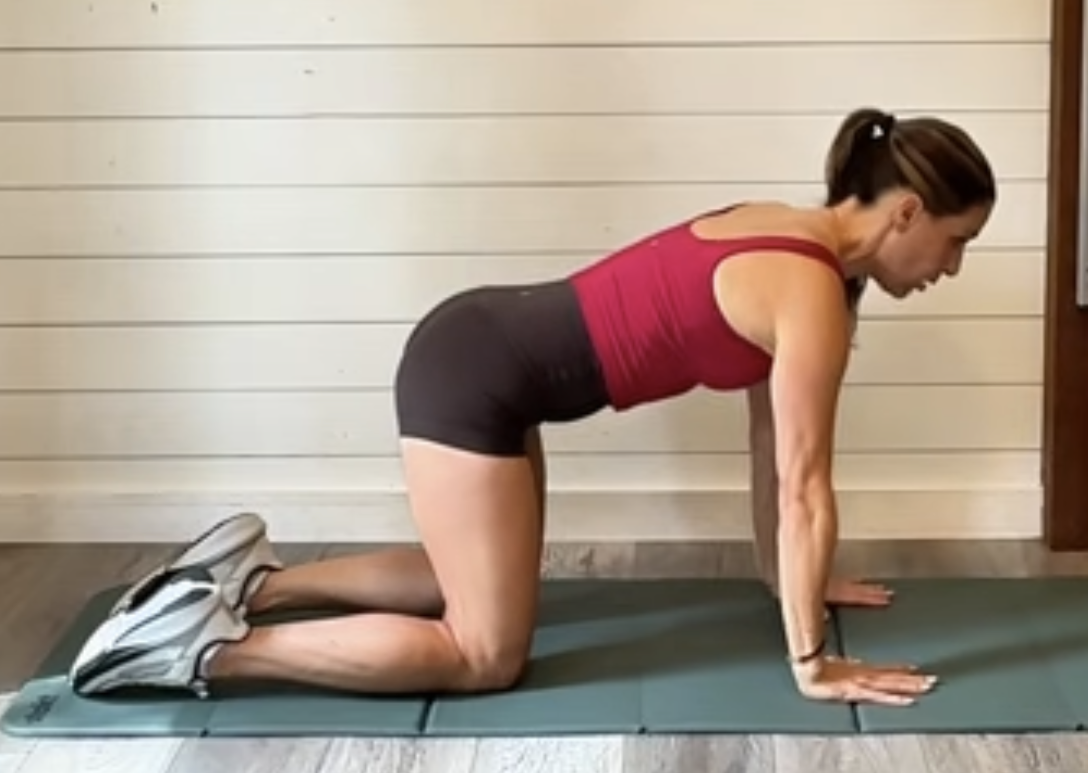
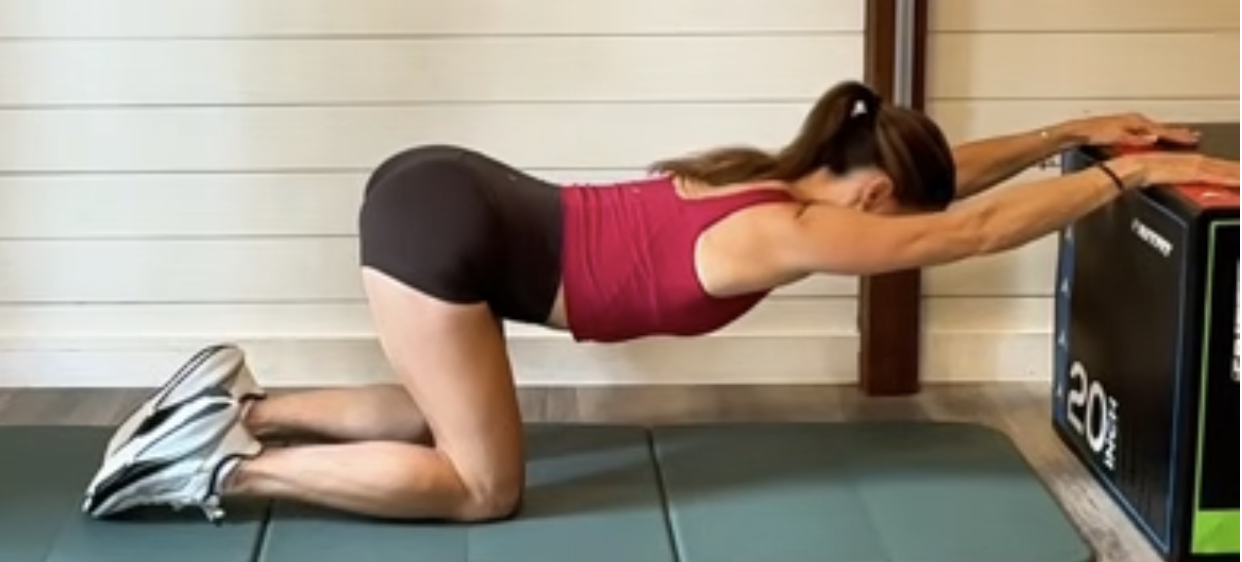
Place your hands on a block or elevated surface and begin from a fairly neutral spine. From there, let the chest sink slightly so you create more extension through the middle of the thoracic spine, thinking roughly T4 to T8 rather than simply dropping into the lower back.
Inhale through the nose, then as you exhale, see if you can get the lower ribs to move down and back while maintaining that upper-back extension. The front of the rib cage stays more open and the lats are at greater length, but you’re still asking the ribs to move with the breath.
4. Full spinal extension
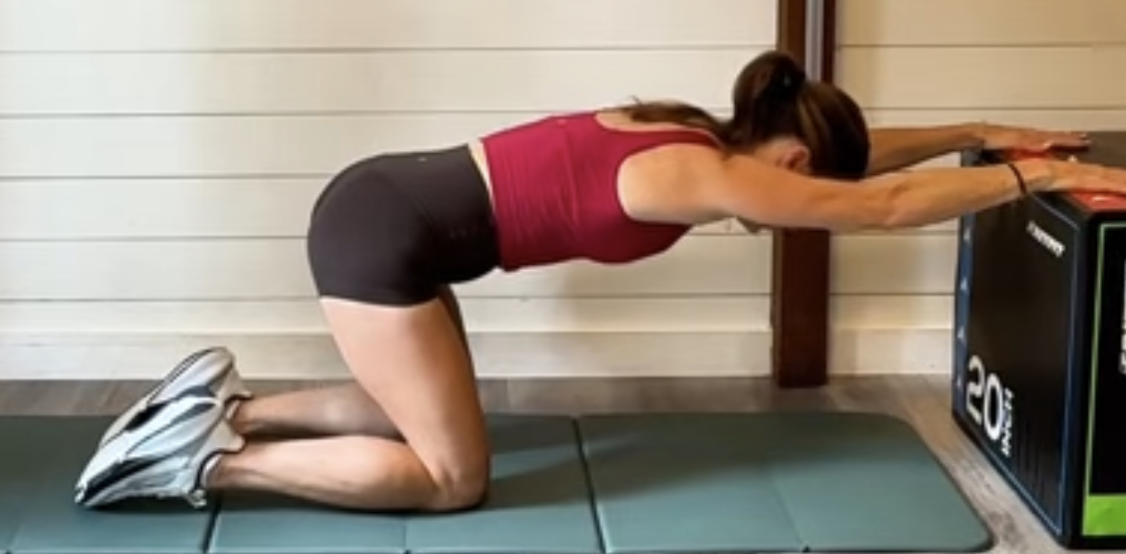
Now let more of the spine move into extension. Look up toward the ceiling, or move only as far into extension as feels available to you, and stay there for a full breath cycle.
Take a full inhale followed by a full exhale and see if you can feel the front ribs move down and inward without needing to flex the spine to make it happen. At the end of the exhale, maintain a little abdominal tension and take your next inhale from there.
Here, you’re asking the abdominal wall to continue managing pressure while it’s in a more lengthened position. Instead of relying on flexion to create abdominal tension, you’re learning to maintain that relationship in extension.
5. Supine flexion versus extension
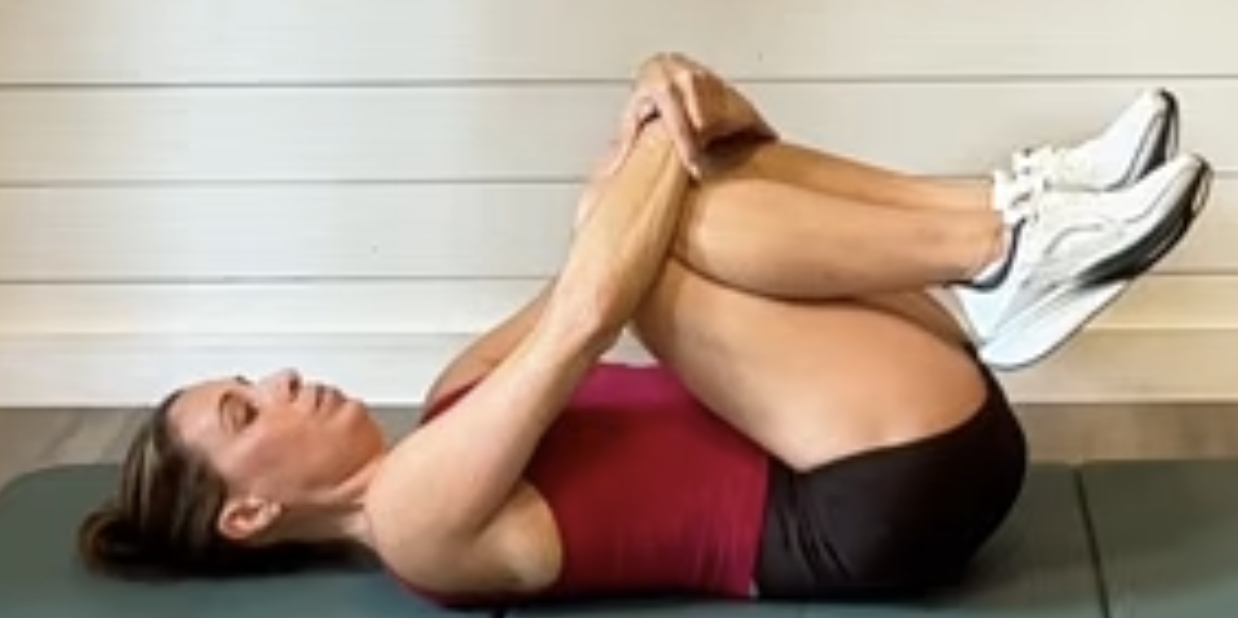
This last one is a simple way to feel the contrast. Lie on your back and hug your knees toward your chest, then inhale into the back of the rib cage. This position naturally limits extension and makes it harder for the ribs to flare forward, so posterior expansion often feels fairly intuitive.
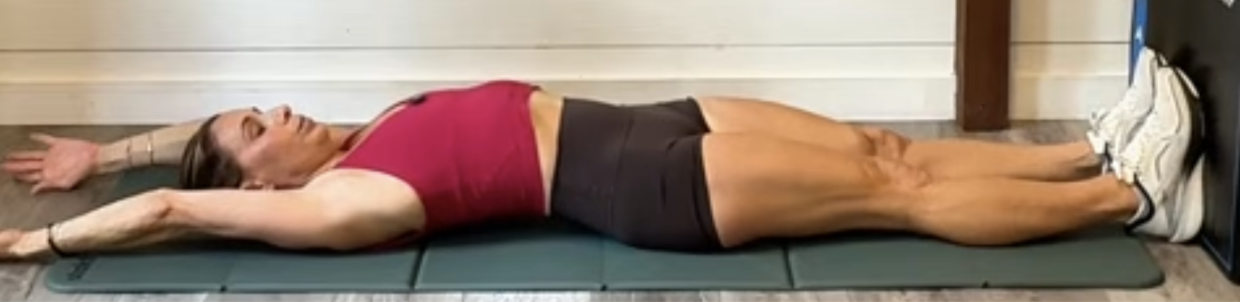
Then do the opposite. Let the legs extend long and reach the arms overhead, allowing the spine to move into more extension. From there, exhale fully and see if you can still get the ribs to move down and inward without simply crunching yourself back into flexion.
It’s the same breath, but in a completely different position.
Who this is for
If you tend to grip through the upper abs and spend a lot of time in a flexed or rounded position, this gives you another way to explore extension without immediately losing control of the rib cage. Instead of asking you to stay compressed all the time, we’re giving the abdominal wall and diaphragm a chance to work from a more lengthened position too.
If you naturally spend a lot of time in extension, learning to breathe and manage pressure in those ranges can also be useful for strength training, overhead work, running, and sport. The goal isn’t to avoid extension. It’s to have more control and more options while you’re there.
That’s really the bigger idea behind all of this. We don’t need flexion to be good and extension to be bad, or vice versa. We want access to both ends of the spectrum.
The goal isn’t just to breathe well in flexion. It’s to be able to find a full breath in different positions, under different pressures, and across more of the movement spectrum. The more places your body can breathe, move, and organize effectively, the more adaptable that system becomes.
Give these a try and let me know what you notice.
Keep exploring
If this way of looking at the body resonates with you, the breath and rib cage are exactly where we spend a full day inside Spinal Health in Motion, my free five-day course.
We move through the spine as one connected system, from the cervical spine through the diaphragm, rib cage, pelvis, and lower body. Each day also includes a short follow-along session so you can take the concepts out of your head and actually feel them in your own body.
[Join Spinal Health in Motion! Free course]
