Knee Biomechanics and Mobility: Untwisting the Knee From the Ground Up
Oct 17, 2026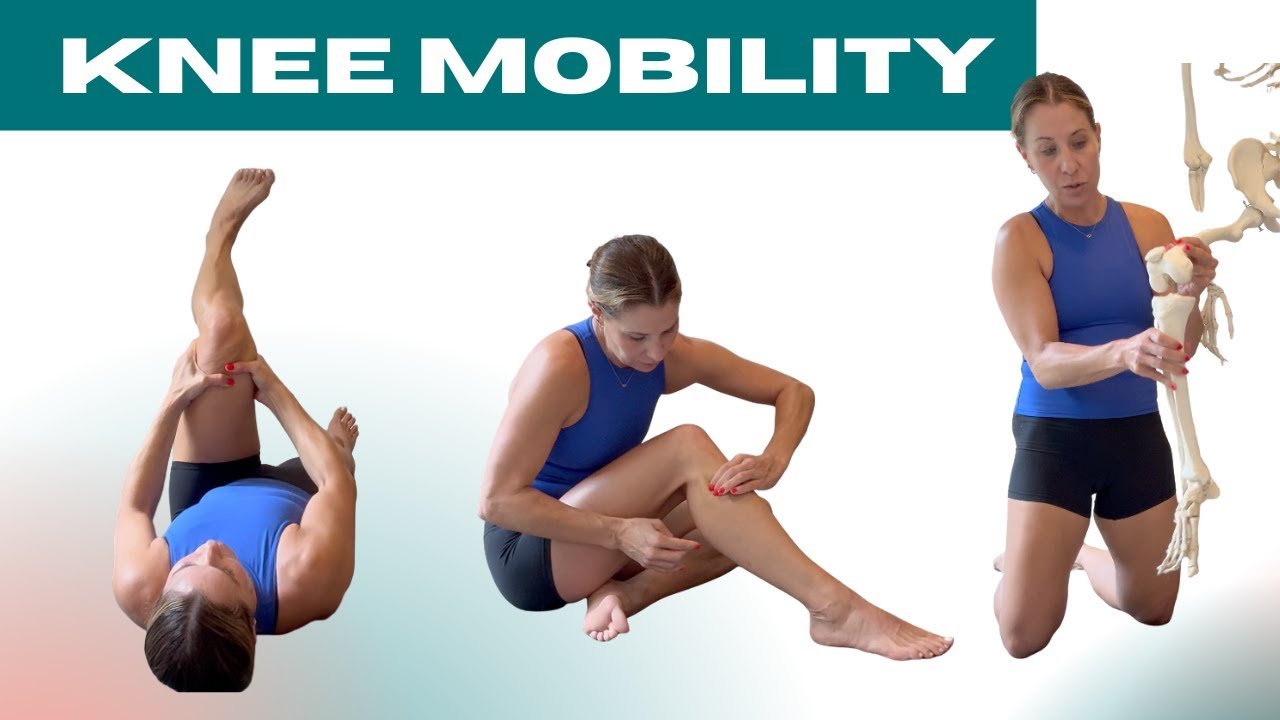
The knee is often where compensation shows up, but it rarely starts there. Here is how I think about the knee, what I commonly see, and the exercises I use to help it move better.
What the knee needs to do
In flexion, the tibia (shin bone) has to internally rotate and the fibula on the outside has to glide posteriorly. When those motions happen, the knee gets a good amount of flexion and the femur can roll posteriorly on the tibia.
In extension, the opposite happens. The tibia externally rotates, the femur rotates anteriorly and externally, and the fibula glides anteriorly.
The "twist" I see most often
One of the most common presentations is a pelvis oriented more forward, either in an extension pattern or a swayback pattern. As the pelvis shifts forward, the femur tends to internally rotate because of pelvis and rib cage position. That is twist number one.
In response, I often see the tibia rotate more externally. That is twist number two.
A femur turning in while the tibia turns out is the combination I see most often when someone has an irritated or painful knee. You can feel the first half of it yourself: tilt your pelvis forward into a big anterior tilt and notice your femurs rotate in.
What the foot is doing
The foot can present in a few different ways:
- An everted heel with a rigid midfoot
- An everted heel with a flat midfoot, and possibly a dropped navicular
- A foot that is rigid throughout and more inverted
Everyone's body orients differently, adapting to the demands of daily life and sport. That is why there is no single answer, but the tibial rotation work below helps the knee, hip and foot of many people.
Exercises to explore
1. Fibula mobilization. Start with the knee bent. Find the bump just below the kneecap (the tibial tuberosity) and the fibular head just outside it. Glide the fibula forward for about a minute, then glide it back for about a minute. In people with an internally rotated femur and externally rotated tibia, I often find this area stiff. A little posterior glide can help when the knee needs to flex.
2. Open chain tibial rotation. Lie on your back with one leg elevated. Hold the femur and rotate it outward, then bend the knee while turning the foot inward to drive tibial internal rotation. Return to the start, and repeat 10 to 15 times.
3. Closed chain tibial internal rotation. Place a ball between your knees and sliders under your feet. Slide the feet out with the knees extending, then draw them in while squeezing the ball and turning the feet in as the knees flex. Repeat 10 to 15 times.
4. Kneeling band drill for the first metatarsal. Place a light band under the first metatarsal head and pull up on it so you feel your glutes stabilize into the foot. Move forward into flexion and internal rotation, finding the inside of your heel, then rotate back out while keeping that contact. If the met head wants to lift, a small wedge underneath can help. Repeat 10 to 15 times.
Watch more

Lower Limb Series Part 1: Lower Limb Mobility

Inversion with knee flexion and extension and hip internal and external rotation
Foot Mobility Exercises: 4 Pronation Drills for Healthier Feet
Keep exploring
Move with me in my weekly Alchemy classes, learn the full approach in Empowered Performance, or go deeper on the foot, ankle and knee in my Ground Up webinar.
