
Strengthening the Foot in 2 Shapes
Oct 29, 2026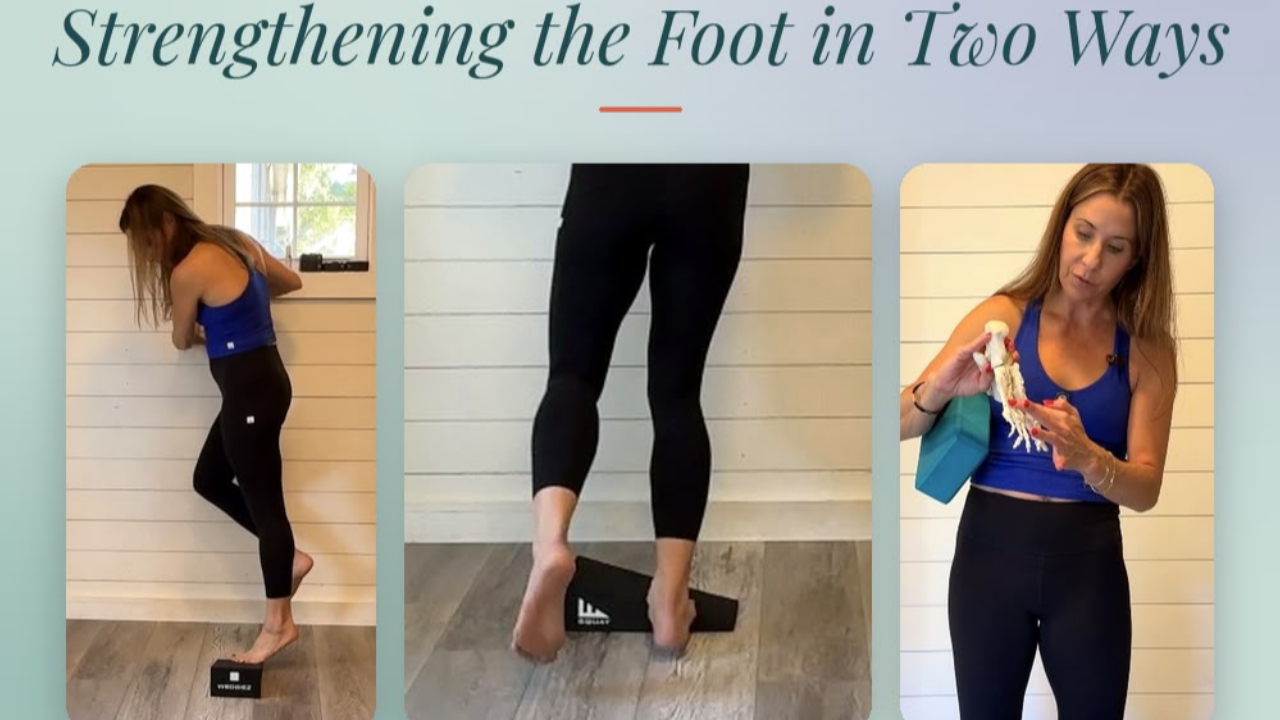
Your foot changes shape with every step
Every time your foot meets the ground, it changes shape. The arch lifts and lowers, the heel tips in and out, and the front of the foot adjusts so you stay in contact with the surface underneath you. That constant reshaping is how the foot absorbs force, adapts to uneven ground, and helps propel you forward.
So when I think about strengthening the foot, I'm curious about more than how strong the arch is in one position. I want to know whether the foot can be strong in more than one shape, and whether it can manage load as it moves between them.
Two shapes, opposite motions
The key to understanding these shapes is the relationship between the heel and the front of the foot. The body is a series of relative motions from joint to joint, and the foot is a great example. As the heel moves one way, the front of the foot moves the other way so the foot can stay grounded.
Supination. When the foot moves into a more supinated shape, the midfoot rises and the heel shifts into a more inverted position, with slightly more contact on the outside of the heel. To balance that, the transverse arch (the arch that runs across the foot at the metatarsals) moves the opposite way into eversion, so the front of the foot can stay in contact through the first metatarsal head at the base of the big toe.
Pronation. When the foot moves into a more pronated shape, the arch lowers and the heel tips in. The transverse arch then moves the other way into inversion, as long as there is still pressure through the fourth and fifth metatarsals on the outside of the foot.
Neither shape is good or bad. Both are part of how a healthy foot moves, and the ability to move between them is what lets the foot adapt to whatever it meets.
The muscles that help hold it together
Several muscles in the lower leg run down and connect into the bottom of the foot. They help stabilize the foot and support those relative motions between the heel and the transverse arch.
- Peroneus longus runs down the outside of the lower leg, wraps underneath the foot, and attaches near the base of the first metatarsal. It plays a big role in stabilizing the first metatarsal, which matters for anyone dealing with bunions.
- Tibialis posterior runs down the inside of the leg, just behind the inner ankle bone, and attaches on the navicular and several other bones of the midfoot.
- Flexor digitorum longus also runs along the inside of the leg and attaches underneath the four smaller toes.
Together, these muscles give the foot support from the outside and the inside, which is why it helps to train them in more than one position.
Two exercises to explore both shapes
For both exercises, you'll need a squat wedge. Holding onto something with both hands for balance makes it easier to pay attention to what's happening in your foot.
Exercise 1: Heel raises in a supinated shape
This one biases the supinated shape, with the heel inverting while the transverse arch moves into eversion.
- Place the front of one foot on the wedge so the transverse arch rests on it. You'll feel more pressure through the fourth and fifth metatarsals, and the front of your foot will slope into a more everted position.
- Lower your heel down, then rise up into a heel raise. As you come up, notice the heel moving into a more inverted position and the arch lifting.
- Lower back down to about neutral and repeat.
- Keep a soft knee the whole time rather than locking it out.
Start with about two sets of 15 to 20 reps.
Exercise 2: Eccentric lowering in a pronated shape
This one explores the opposite relationship, with the heel moving into eversion while the front of the foot moves into inversion.
- Place the foot on the wedge so the transverse arch slopes downward from the first metatarsal head toward the fifth.
- Let yourself lower all the way down.
- Come up only to neutral and pause there, then lower again.
- If you have good range of motion, move higher on the wedge so you can lower a little further.
Here the work happens on the way down. The same muscles are still active, but they're working in a longer, more lengthened position as the midfoot takes on load.
What to notice
As you try both exercises, pay attention to how different they feel. Does one side feel different from the other? Is one shape easier to find? Can you feel how the pressure changes underneath your foot from one exercise to the next? Your body is giving you useful information about where it has more options and where it could use a few more.
Watch the full video
Wedge position is much easier to see than to read, so the video walks through both setups from a few different angles.
If you'd like to keep exploring how the foot, ankle, and knee work together, my Ground Up webinar goes deeper into lower limb biomechanics.
And if you're a coach or movement professional who wants to bring concepts like these into how you assess, program, and coach, that's a big part of what we explore inside Empowered Performance.
Questions about these exercises? Email [email protected].
