
Tight Upper Traps? Why the Back of Your Shoulder Might Be the Real Story
Nov 04, 2026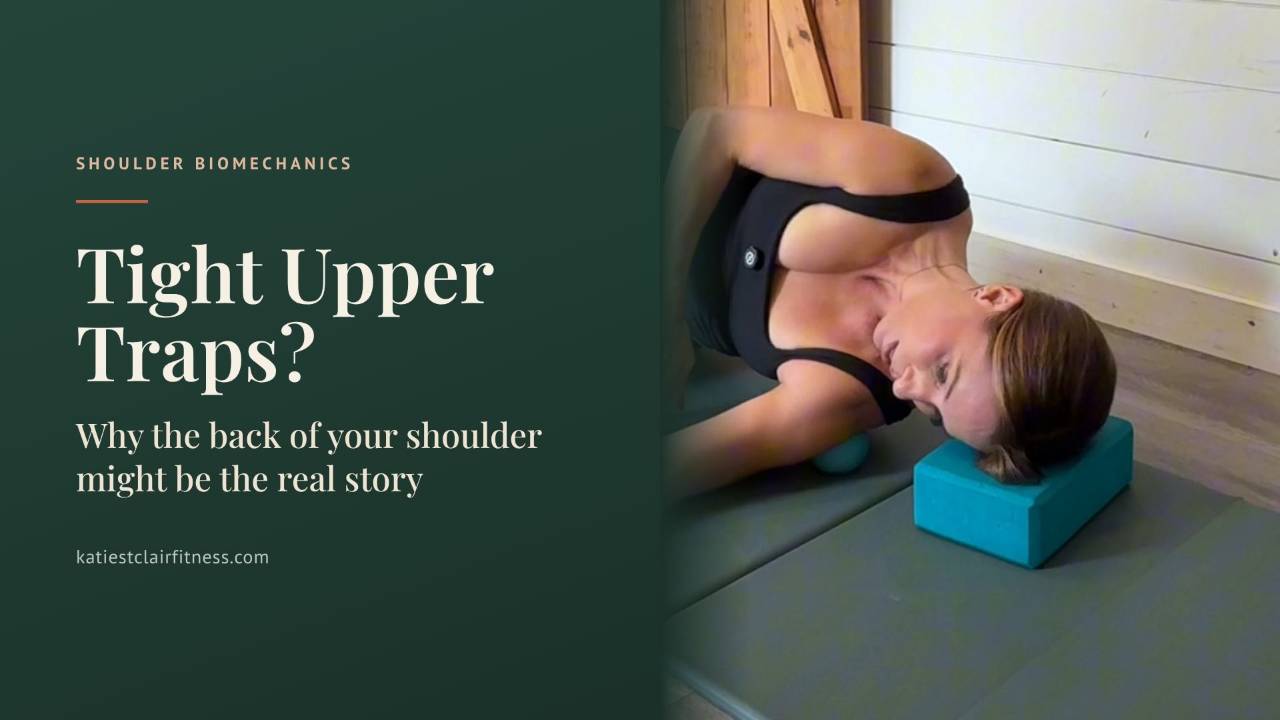
Tight upper traps don't always mean you need to stretch your neck or roll out the traps themselves. When the neck feels tense, that's usually where our attention goes. The tension you feel at the top of your shoulders is real, but it's often the body showing you something happening a little further back, in the back of the shoulder.
What's happening in the back of the shoulder
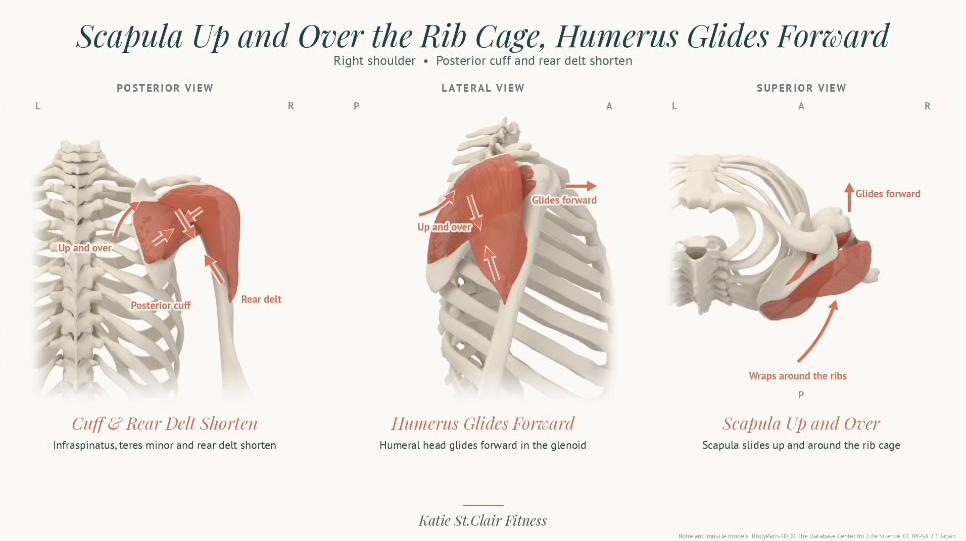
The shoulder joint is where the humerus (your upper arm bone) meets the scapula (your shoulder blade). Several muscles connect these two bones across the back of the joint. When those muscles become shortened, they can push the humerus forward in the socket. They can also pull the scapula closer to the humerus, drawing it up and over on the rib cage.
How that shows up in your neck
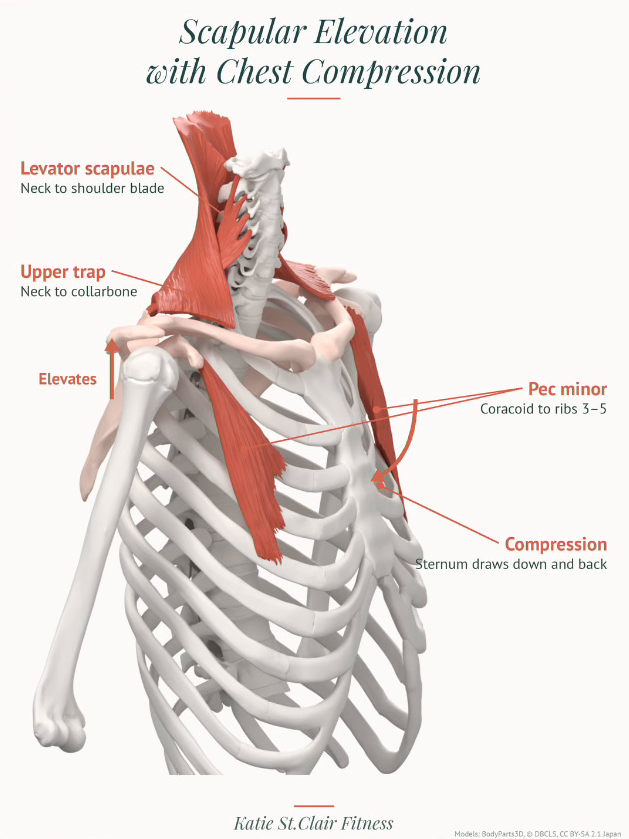
When the scapula moves up and over and the humerus moves forward, the pec minor gains leverage, and so do the upper traps and the levator scapulae. As these tissues tighten, the front of the chest gets compressed and the neck gets pulled forward or to one side. The tension you feel in your neck may be where the pattern shows up rather than where it starts.
Why neck work alone may not be enough
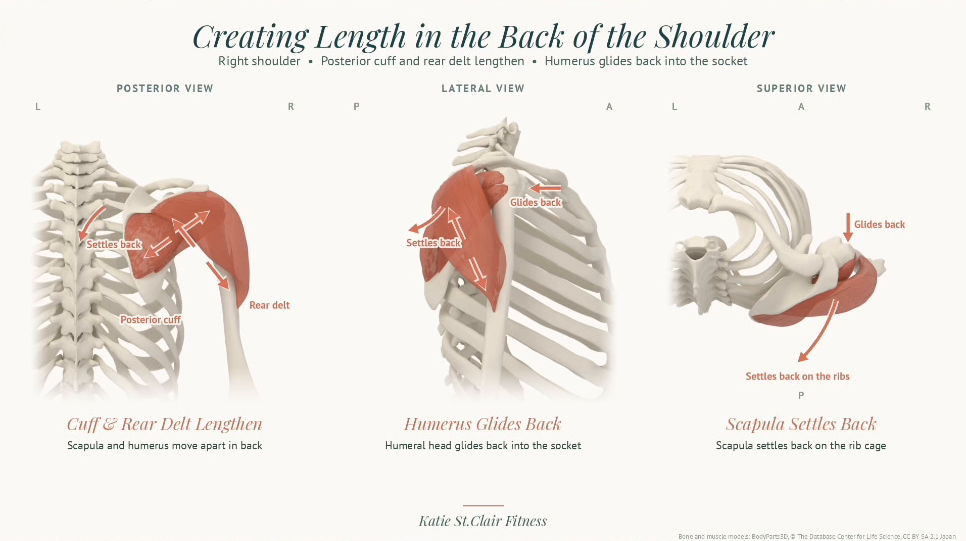
That's why all the neck work in the world won't necessarily change it. Instead, we want to create space in the back of the shoulder, between the humerus and the scapula. That gives the scapula room to settle back into a neutral position and the humerus room to glide back where it belongs.
Here's the full technique so you can follow along with me.
How to release the back of the shoulder
You'll need a small ball and a yoga block (a folded towel works too).
Set up on your side. Lie on your side and place the ball into the back of your shoulder. Rest your head on the block so your neck can relax. Hold this position and notice where you feel tension.
Add length. Bend your elbow, then lift it off the floor to increase the length through the back of the shoulder. If that's too tender, keep your elbow down and simply bend and straighten your arm. Take slow inhales as you go.
Find the notch. Once you feel a little release, rotate slightly back away from the ball. There's a small notch in the back of the joint where you'll feel the ball sink in. From there, work a bit more posterior and a bit more anterior as you move through your breaths.
Mobilize on hands and knees. Come onto your hands and knees. Push away from the floor and use your opposite hand to push out on the upper arm as you rotate over that arm. Let the humerus push back in the socket. Repeat this for about 10 reps.
Recheck your range. Turn your head side to side and notice how your neck moves now. You might be surprised how much more freedom you have.
Stay curious about what you notice
Every body is different, and one shoulder may feel very different from the other. Pay attention to what changes, whether that's how far your neck turns, how your arm reaches, or how your shoulders sit when you're standing still. The body is showing you where it has been finding options, and there's always another layer to explore.
Keep exploring
Explore the spine in the free Spinal Health in Motion course, move with me in weekly Alchemy classes, or learn the full approach in Empowered Performance.
If you have questions about this technique, email us at [email protected].
